



In 2015, I was helping co-found the nonprofit Tech Bloc, a grassroots advocacy group for San Antonio’s tech community. Our advocacy launched right in the middle of a heated mayoral election. It was my first encounter with candidate confusion: a crowded field featuring Ivy Taylor, Leticia Van de Putte, Mike Villarreal, and others. Taylor eventually won, and we had to negotiate with her administration to bring rideshare companies back.
As someone who had never really been involved in politics before, the experience was eye-opening.
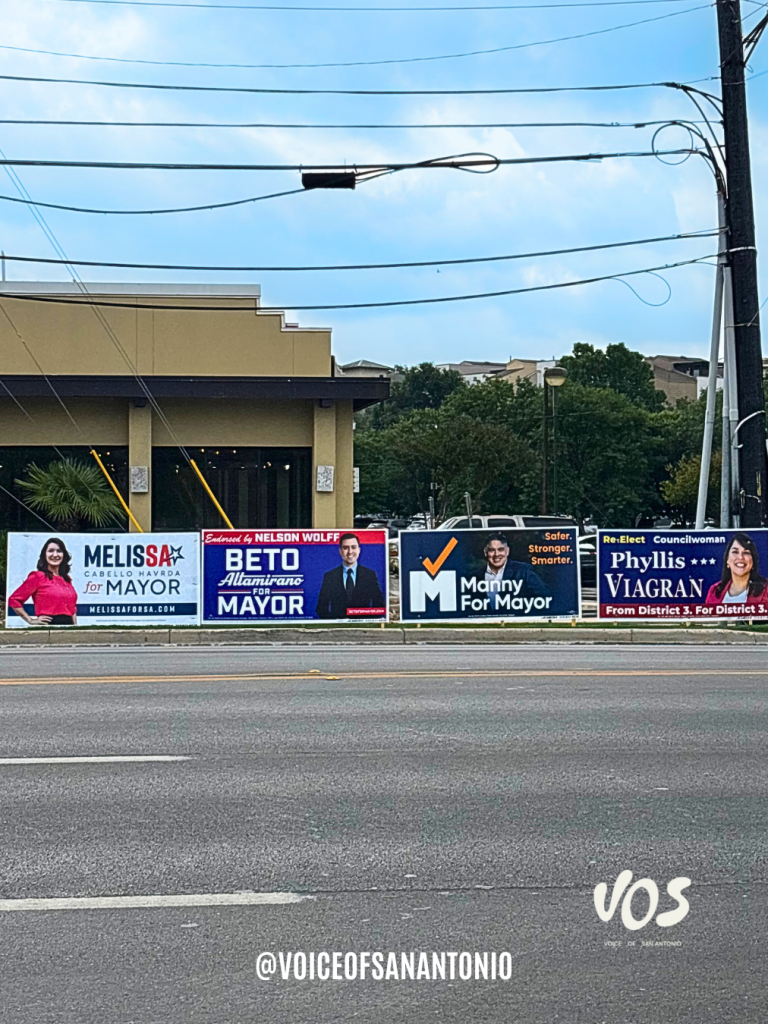
Now, fast forward to 2025 — and we’re seeing candidate confusion on a much larger scale. Only this time, it’s worse. And if we don’t do something to address it, we’re going to keep repeating this problem for years to come.
As I’ve written in previous articles, San Antonio is about to welcome one million new neighbors over the next few decades. Combine that growth with our historically low voter turnout, and you have a recipe for disaster. We need to face a hard question:
How do we make it easier for good candidates to emerge without creating total chaos at the ballot box?
Let’s explore why having 27 mayoral candidates is bad for democracy, what other cities have done about it, and a new idea we might want to consider here at home.
What’s the Problem With 27 Candidates?
At first glance, having 27 candidates for mayor might sound like a great thing — civic participation at its finest, right?
Not exactly.
First, it causes massive voter confusion.
Research shows that too many choices don’t empower voters — they overwhelm them. A famous 2000 study by psychologists Sheena Iyengar and Mark Lepper found that when people are presented with more than 5–7 options, the quality of their decision-making plummets. Instead of feeling energized by their choices, they either shut down, make random picks, or default to the most familiar name.
In an election this important, random guesses and confusion are dangerous outcomes.
Second, it leads to vote splitting.
When too many candidates are on the ballot — especially candidates who have no real shot at winning — they siphon off small numbers of votes from more viable contenders. A few dozen or a few hundred votes here and there can easily swing an election, particularly in a runoff system like San Antonio’s.
In other words, a serious candidate could lose simply because ten minor candidates pulled away slivers of their natural base. It dilutes real voter intent and opens the door for outcomes that don’t reflect the true will of the people.
Together, voter confusion and vote splitting erode the legitimacy of our elections.
And that’s a problem we can’t afford to ignore — especially as San Antonio grows bigger and more complex.
How Other Cities Have Tackled the Problem
Other major cities have wrestled with this same issue — and some have found smart ways to balance open democracy with election sanity.
- New York City introduced Ranked Choice Voting (RCV) so voters can rank candidates in order of preference. This helps prevent vote splitting and ensures a candidate with broad support wins, even in a crowded field.
- Los Angeles requires candidates to either pay a filing fee or gather a set number of signatures from voters. This ensures that candidates demonstrate at least some basic support before getting on the ballot.
- Chicago has strict signature requirements for ballot access. Only candidates with strong community backing even make it to election day.
Each of these solutions keeps the process approachable — but raises the bar just enough to avoid confusion and chaos.
A Stronger Solution for San Antonio
Here’s a simple idea that could work for us:
Let anyone file to run for mayor, just like they can today. But — by the first finance committee reporting deadline — require candidates to show they have at least $5,000 or $10,000 raised in their campaign account.
It’s a modest threshold — but enough to prove you’re serious, organized, and capable of rallying real support.
And to strengthen it even further, we could also add a signature requirement — something modest, like gathering 500 to 1,000 valid signatures from registered voters. This would show you not only can organize financially, but you also have real-world backing from the people you’re asking to serve.
You might face pushback from people who say:
“Money shouldn’t decide democracy.”
Here’s the answer:
“We’re not letting money decide — we’re asking for a basic show of organizing ability. If a candidate can’t raise $5,000 and gather a few hundred signatures, how will they reach hundreds of thousands of voters?”
This approach would:
- Preserve open access for dreamers, newcomers, and outsiders.
- Filter out vanity campaigns and unserious candidates.
- Protect voters from decision fatigue and bad outcomes.
- Keep San Antonio true to its roots — accessible, but practical.
It strikes the right balance: welcoming enough to discover the next great leader, but structured enough to prevent our ballots from turning into a confusing free-for-all.
Final Thoughts
Look, this is just one man’s idea.
Maybe you have a better one. I welcome it — seriously.
But I know this:
Doing nothing isn’t an option.
We can’t afford to let our elections descend into confusion — or worse, a spectacle — when so much of San Antonio’s future is on the line.
Sources / Notes for “Candidate Confusion” Article
Link to Page
(Referenced to confirm Ivy Taylor, Leticia Van de Putte, Mike Villarreal, and others in the 2015 election.)
Iyengar, S. S., & Lepper, M. R. (2000).
When Choice is Demotivating: Can One Desire Too Much of a Good Thing?
Journal of Personality and Social Psychology, 79(6), 995–1006.
→ Link to Abstract
(Cited for “choice overload” research showing decision-making worsens beyond 5–7 options.)
New York City’s Introduction of Ranked Choice Voting (2021 Mayoral Election)
Source: TIME Magazine, “New York’s Mayoral Race Shows Ranked-Choice Voting Works”
Link to Article
(Cited for how New York implemented Ranked Choice Voting to manage crowded fields.)
Los Angeles Ballot Access Requirements
Source: Jones Day Law Firm Summary of Los Angeles Municipal Election Requirements
Link to Article
(Cited for LA’s requirement of a filing fee or a petition for candidacy.)
Chicago Mayoral Ballot Access Requirements
Source: Chicago Board of Election Commissioners
Link to Election Requirements
(Cited for signature requirements as a candidate filter in Chicago elections.)
2025 San Antonio Mayoral Election Candidate Field
Source: San Antonio Report, “Early Voter Turnout for 2025 Mayoral Race”
Link to Article
(Cited for confirmation of 27 candidates running in the 2025 mayoral race.)
2015 San Antonio Mayoral Election Candidate List
Source: Wikipedia, “2015 San Antonio mayoral election”