

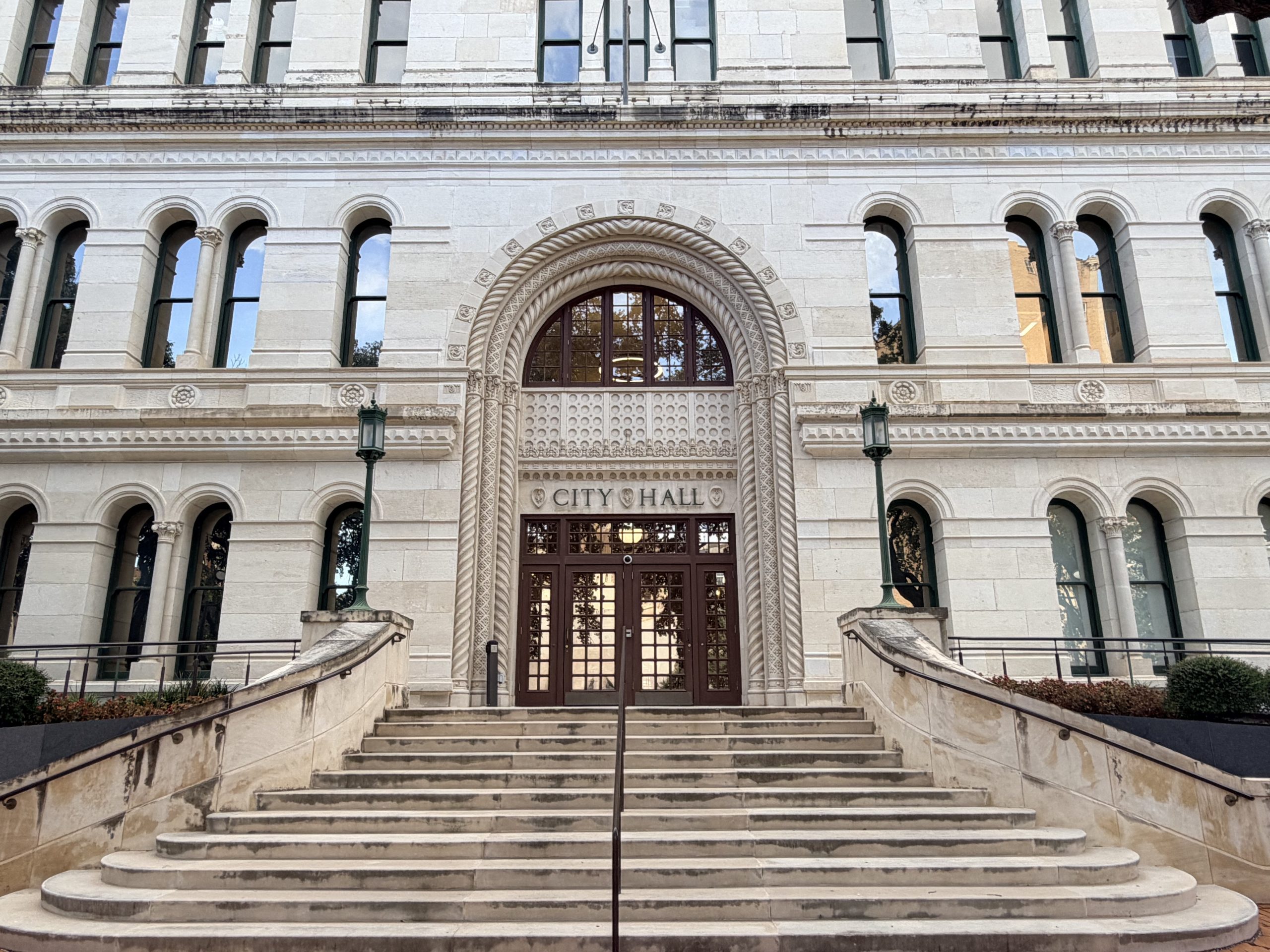




When I first started working downtown, an old wise man pulled me aside and said something I’ll never forget.
“Lorenzo, the mayor of San Antonio only has one job,” he said. I leaned in.
“Count to six.”
I nodded like I understood him completely. I did not.
It took me years to realize he wasn’t giving me a math lesson. He was explaining how our city actually works, and it’s something every San Antonian should understand.
How the city actually works
One of the biggest misconceptions about our city government is that the mayor runs San Antonio. The mayor doesn’t, and never has. Not Gina Ortiz Jones today, and not Julián Castro, Ron Nirenberg, or Phil Hardberger before her.
San Antonio runs on a council-manager government: a “weak mayor” system, which is a terrible name for a pretty smart idea. The mayor is one of eleven votes on the City Council. The mayor runs the meetings, gives the speeches, and is the face of the city. But when the votes get counted, the mayor’s is worth exactly one. Same as everybody else’s.
Which brings us back to counting to six. To get anything meaningful done, the mayor needs six of those votes, which means persuading at least five other independently elected people to get on board. The whole job is to get to six.
I’ve spent a good chunk of my life in and around boardrooms, and City Hall runs on the same wiring. The City Manager is the CEO. The City Council is the board of directors. The mayor is the chair of that board. And here’s the thing every new chair learns fast. The chair doesn’t get to bang a gavel and make it so. The job is to build consensus and get something done.
Our system wasn’t built to concentrate power in one official. It was built to distribute it, on purpose. Plenty of cities run “strong mayor” systems, where one person controls hiring, firing, everything. Fast, yes. But when that much power goes unchecked, something grows in the dark. And we have a word for what it becomes.
Corruption.
Now, let me be careful. This isn’t about calling another city dirty. I love Chicago. But Chicago learned this the hard way. For decades, its mayor’s office ran like a machine, where a city job was a reward for loyalty, not a paycheck for work. In 2006, one of Mayor Richard M. Daley’s top aides was convicted for rigging city hiring and promotions, based not on what people could do, but on who they knew. That’s how corruption works: it rarely kicks the door in. It seeps in quietly, one favor at a time, whenever a system stops watching itself. It can happen to any city. Including ours.
So San Antonio chose a different path. We hired a professional City Manager to run the day-to-day, and we require our officials to build consensus before big decisions. Slower? Absolutely. Frustrating? Without question. But that isn’t a flaw.
That friction isn’t the system failing. It’s the system protecting you.
When governing becomes campaigning
Which is exactly why the fight over the proposed Spurs arena vote worries me. Instead of spending her political capital persuading fellow council members, Mayor Gina Ortiz Jones has taken her case straight to the public, through TV interviews, town halls, and community meetings, asking San Antonians to rally behind a citywide vote. On its face, reasonable enough.
But I think we’re watching something else: the mayor using outside pressure to build the coalition she’s so far struggled to build inside City Hall. Let me be clear. I have no doubt Mayor Jones loves this city and believes she’s fighting for the right thing. This isn’t a knock on her intentions. It’s a question about her strategy.
This isn’t just my impression. It’s a pattern. Time and again, Mayor Jones has found herself on the short end of lopsided votes, from her request to pause the Spurs deal to how the council sets its own agenda. In February it turned personal: the council voted 8 to 1 to censure her, the first such reprimand of a San Antonio mayor in modern history. And her clearest win may be the most telling of all. When she pushed to move city elections to November, it passed 6 to 5. She got exactly what a San Antonio mayor needs. But barely.
Six votes.
This is the start of a chaos campaign, where the consensus-building inside City Hall gets replaced by pressure from outside it. Campaigns and governing aren’t the same thing. Campaigns are about winning public opinion. Governing is about earning six votes. A town hall is fine. But public advocacy can’t replace coalition building.
Now, some of you are thinking: isn’t going straight to the people the most democratic thing a leader can do? Doesn’t my voice matter?
It matters more than anything. And that’s the point. You already spoke. You elected eleven people to that dais, not one. When a mayor can’t win those colleagues over and instead cranks up outside pressure to force their hand, that isn’t democracy getting louder. It’s the system getting blurrier. It trades an accountable process for a shouting match where the biggest crowd wins and your neighbor becomes your opponent. That doesn’t amplify your voice. It drowns it out. And those colleagues? The public elected them too. Persuading them isn’t ignoring you. It’s the job you handed her.
San Antonio vs. its challenges, not mayor vs. council
So what do we do about it?
An anonymous op-ed in Voice of San Antonio said it better than I can. The writer wanted “to see this story move from Mayor vs. Council to San Antonio vs. challenges.” But they didn’t stop at the diagnosis. They offered a way forward.
It started with a cease-fire: “No surprise rule changes. No public potshots or call-outs.” Then the real work: “Map the overlap in the room and convert it into 4 to 6 agreed-upon priorities with named owners and dates.” And finally, sunlight: “Stand up a simple webpage that lists those priorities, who’s accountable, milestones, and monthly status.” Because, as the writer put it, “residents want to see steady, transparent decision-making, not a running feud.”
Read that middle step again. Four to six priorities. Of course it is. In San Antonio, six is the number that moves anything, which means the answer to all this infighting has been sitting in plain sight the whole time. It doesn’t take a strong mayor. It doesn’t take a citywide referendum. It takes six people willing to write down what they’re for, put their names on it, and invite everyone else to join.
So here’s my challenge, and I don’t care who picks it up first. A council member ready to lead. The mayor herself. Whoever’s ready. Stop waiting for the other side to blink. Put a plan on the table, in public, and ask the other ten to sign it or tell the city why they won’t. No faction. No backroom bloc. The opposite: a coalition built in daylight, open to anyone with the courage to govern.
And that old downtown mentor? He was right all those years ago. Sort of. Because the one job he described was never the mayor’s alone. It belongs to everyone at that dais. Count to six.
So who’s it going to be?
Citations
- City of San Antonio, City Charter. The City notes that San Antonio adopted its current charter in 1951 and became a council-manager form of government.
- City of San Antonio, Mayor and City Council: About. Explains the structure of the Mayor and City Council, including the mayor and ten district council members, and notes that City Council serves as the city’s policymaking and legislative body and appoints the City Manager.
- NBC News, Chicago Patronage Convictions, 2006. Reporting on the convictions of Chicago officials, including Mayor Richard M. Daley’s former patronage chief, in a scheme involving politically influenced city hiring and promotions.
- Chicago Tribune, A Brief History of Nepotism in Chicago Politics. Historical context on Chicago machine politics, nepotism and the use of government jobs and influence to reward political connections.
- KSAT, Council approves term sheet, shoots down Mayor Jones’ request for a strategic pause on the Spurs funding deal. Documents the August 21, 2025 council vote rejecting Mayor Jones’ proposed strategic pause on the Spurs deal by a 7 to 4 vote.
- Big City Small Town, The Midweek #68: A Year of Misfires by Mayor Jones. Will Year Two Be Different? Bob Rivard details Jones’ series of lopsided council defeats, including 9 to 2 and 10 to 1 votes, and examines her difficulty building a consistent council coalition.
- Texas Public Radio, San Antonio City Council approves moving May municipal elections to November in a narrow vote. Documents the December 18, 2025 decision to move San Antonio municipal elections to November, which passed 6 to 5.
- KSAT, San Antonio Mayor Gina Ortiz Jones censured in historic first. Documents City Council’s February 27, 2026 vote to censure Mayor Jones 8 to 1. KSAT reported that city staff found no previous successful censure of a sitting San Antonio mayor since adoption of the current charter.
- San Antonio Current, Analysis: Time may be running down for Mayor Jones to rethink her lone wolf approach. Analysis of Mayor Jones’ relationship with City Council, including the censure, staff turnover and broader concerns from City Hall observers about coalition-building during her first year.
- Voice of San Antonio, It’s Time for San Antonio vs Challenges, Not Mayor vs Council. The anonymous San Antonian writing as C. Tadino argues for moving beyond the mayor-versus-council conflict and proposes a three-part reset: a cease-fire, four to six shared priorities with named owners and deadlines, and a public progress tracker. This is the article quoted directly in the final section of The Chaos Campaign.