
Presented in partnership with the City of San Antonio’s Department of Arts and Culture
Early in the morning, before the River Walk fills with sound, downtown San Antonio feels suspended in time. The river moves quietly beneath the Commerce Street Bridge, carrying generations of history just below the surface. Bill Lyons, third generation owner of Casa Rio restaurant, has been contemplating for almost five decades how to better help convey these stories of San Antonio’s past.
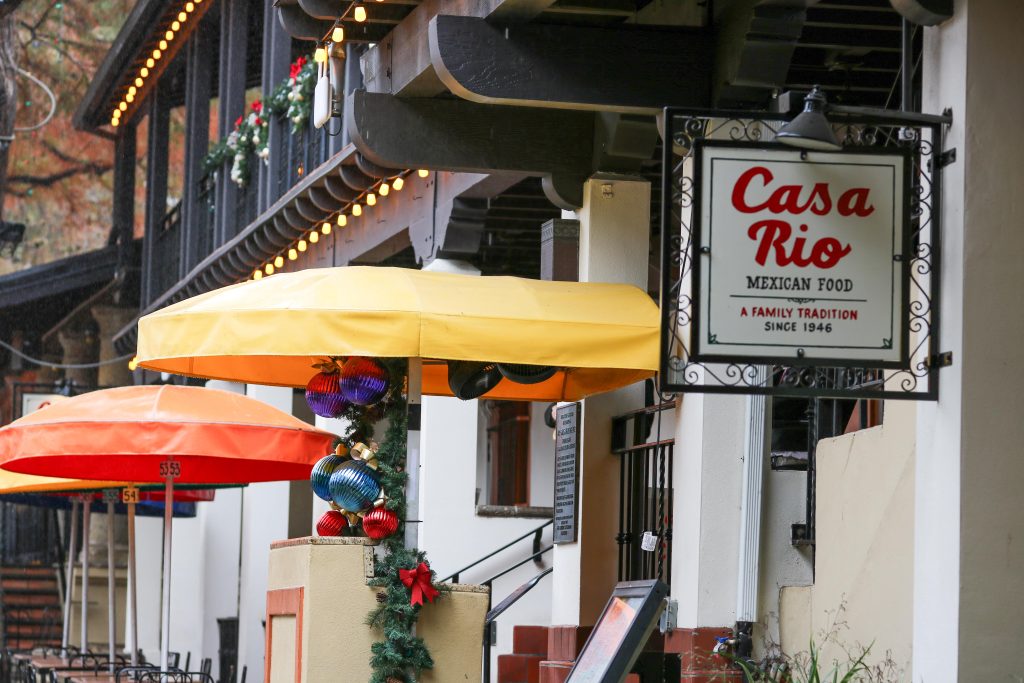
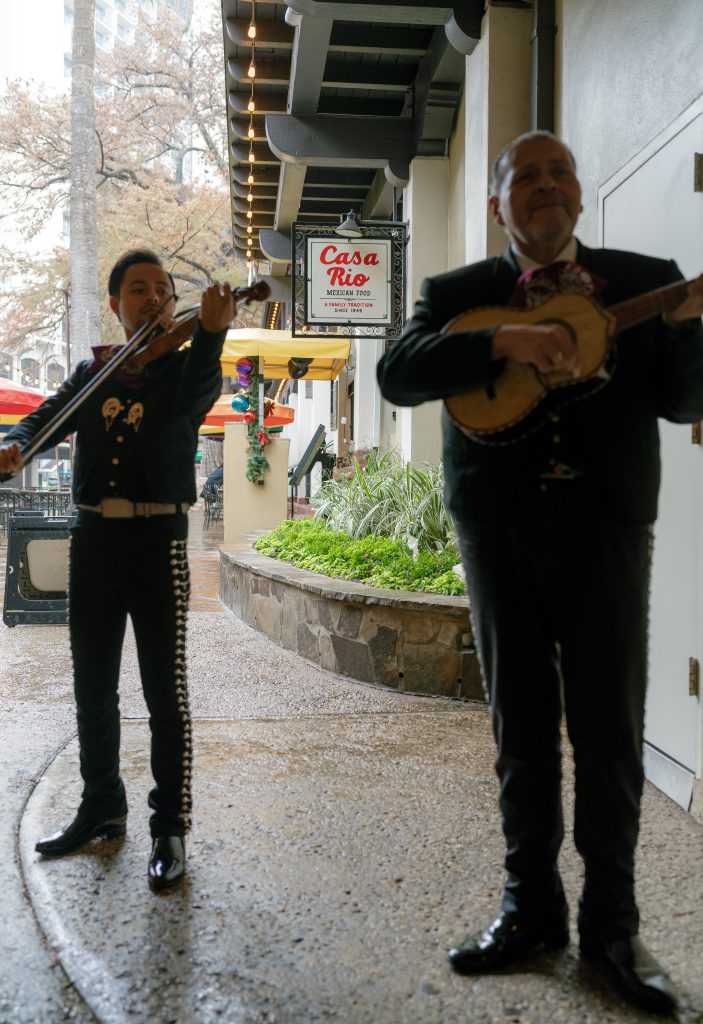
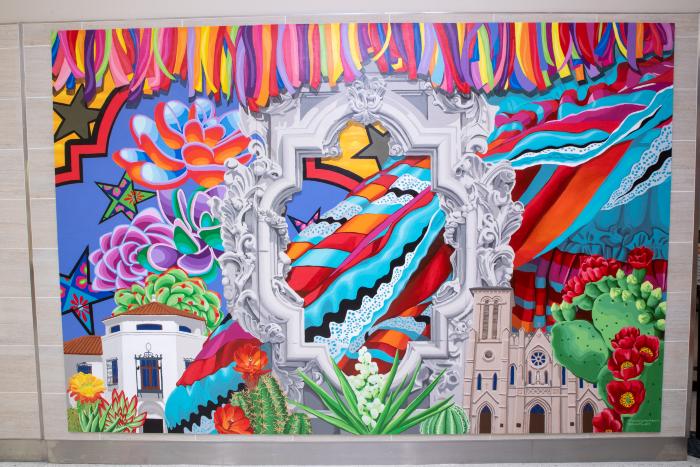
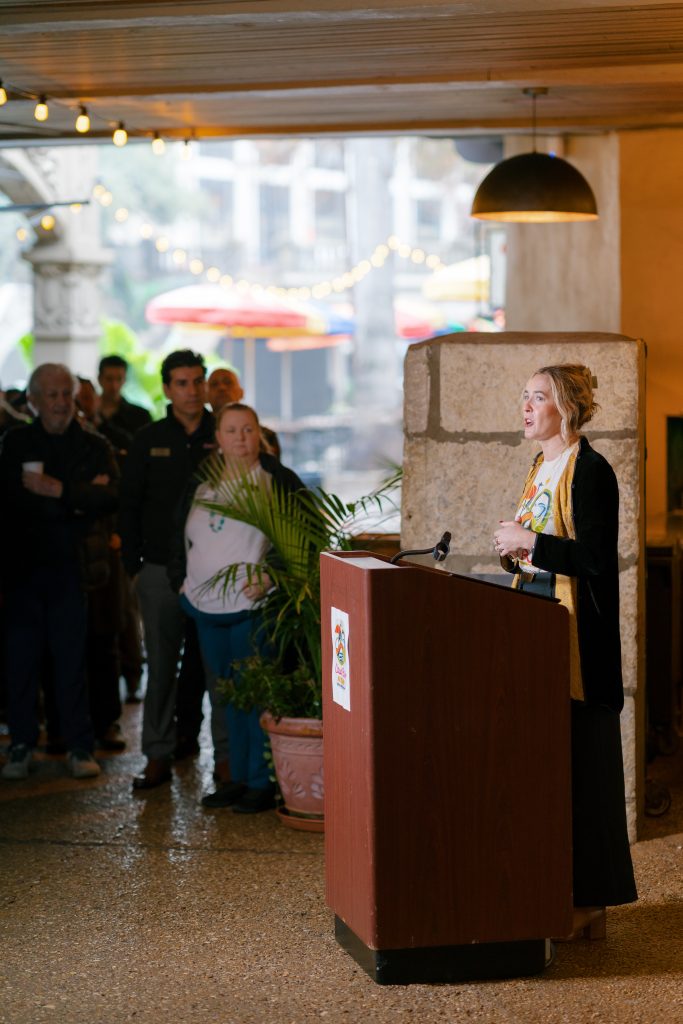
On December 17, Casa Rio unveiled The Flow of People, The Passage of Time, a thirty-two foot public mural by San Antonio artist Cristina Sosa Noriega. Placed along one of the most traveled crossings on the River Walk, the work traces more than three hundred years of movement across a single span, inviting viewers to see downtown not as a fixed destination, but as an evolving place shaped by those who came before.


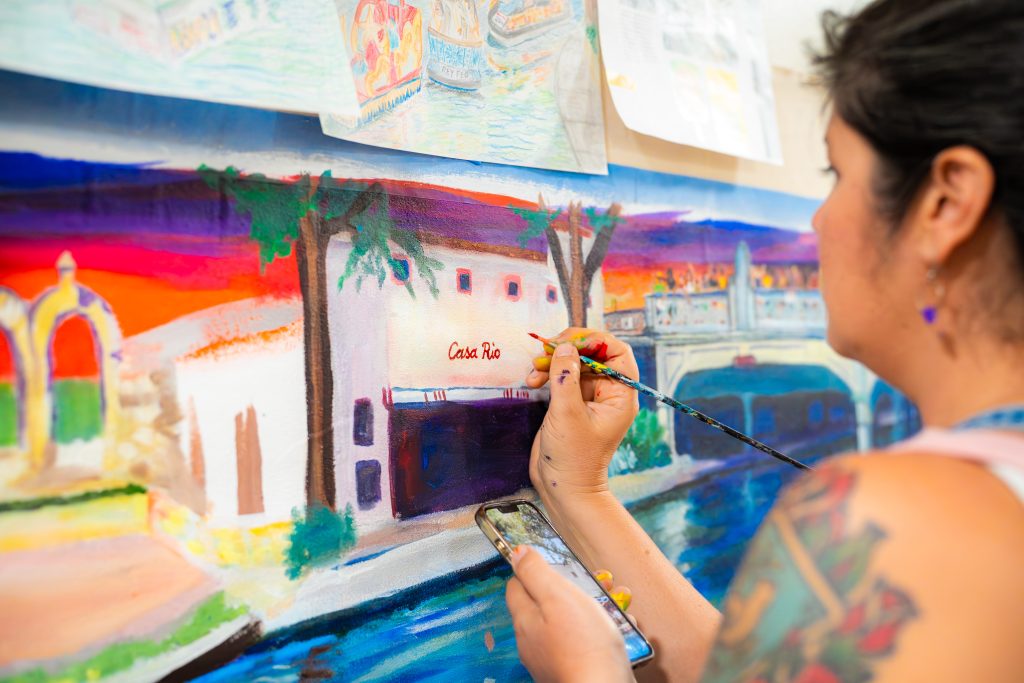
Cristina Sosa Noriega painting the mural in her studio, October 2025.
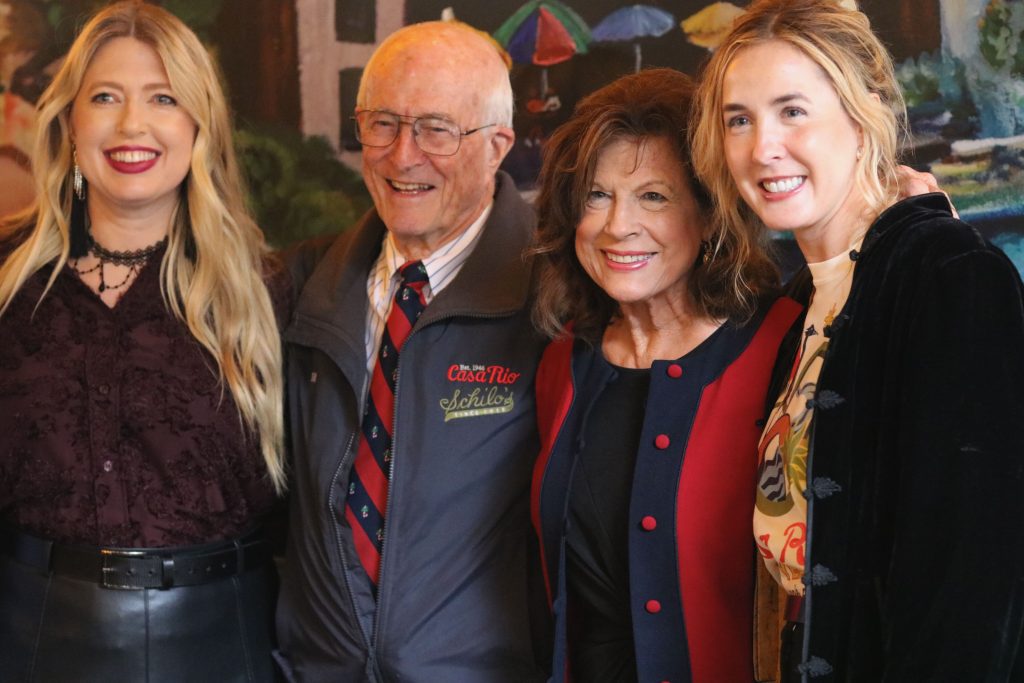
Commissioned as Casa Rio approaches its 80th anniversary in 2026, the mural reflects both legacy and intention. Funded entirely by Casa Rio, the project was developed in collaboration with the City of San Antonio Department of Arts & Culture, whose guidance helped bring the artwork into the public realm.
“I often wondered what our downtown looked like 100 or even 200 years ago, before the shops and crowds. While painting the mural, I thought of those who came before us, whose footsteps shaped this city. Their stories echo beneath the Commerce Street Bridge, and my hope was to help bring them to life.”
–Cristina Sosa Noriega, Artist

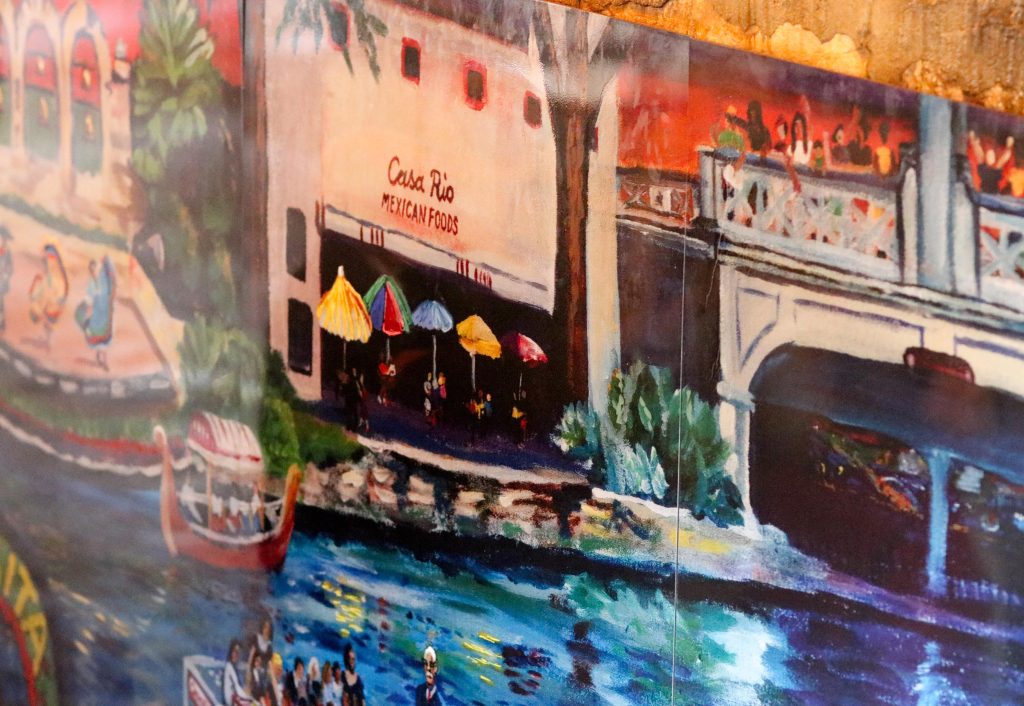

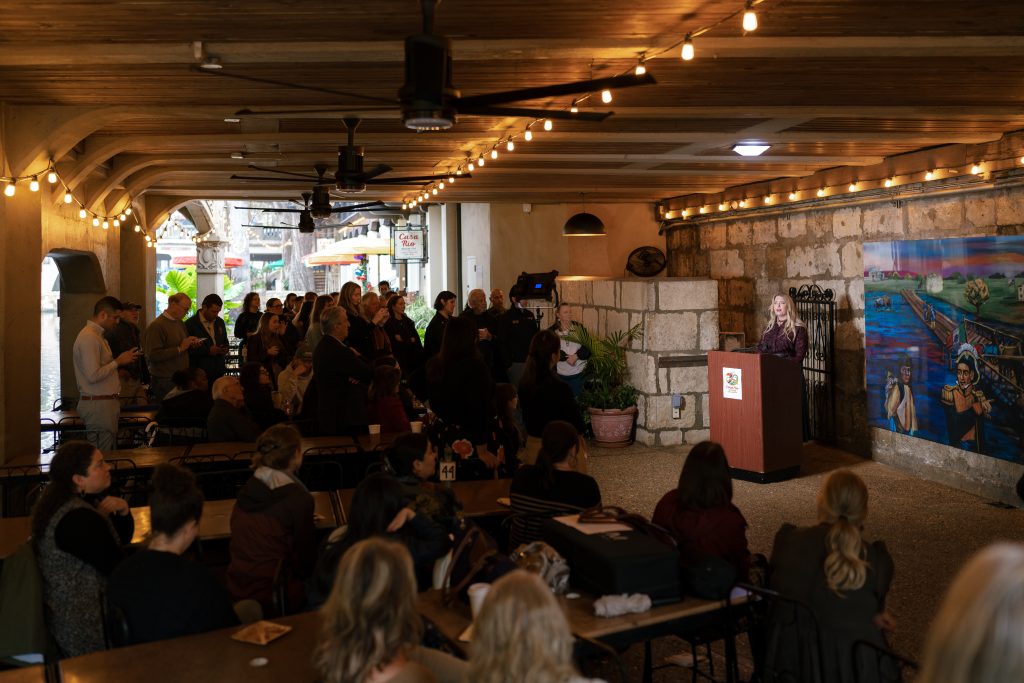
The mural unfolds across four historical eras anchored by the river and the bridge as they evolve over time. As the oldest crossing of the San Antonio River in the immediate region, the bridge carries endless stories. Early scenes depict presidio soldiers and friars crossing between Mission San Antonio de Valero and San Fernando Cathedral, followed by ox drawn wagons and a moment featuring Santa Anna during one of the most formative events in the city’s history, the Battle of the Alamo. As the city industrializes, iron bridges appear alongside commerce and trade, with Theodore Roosevelt serving as a symbolic figure from that era as he crossed with his Rough Riders.
The final section brings the story into the modern River Walk, featuring Casa Rio’s colorful umbrellas, Fiesta crowds, decorated barges, and a tribute to Rosita Fernandez. Casa Rio’s historic river cruises appear as well, reflecting the restaurant’s long relationship with life along the river.
“As we approach eighty years on the River Walk, this felt like an opportunity to give something back to our community. We wanted to invest in a piece of public art that honors the history of this place and contributes to its future.”
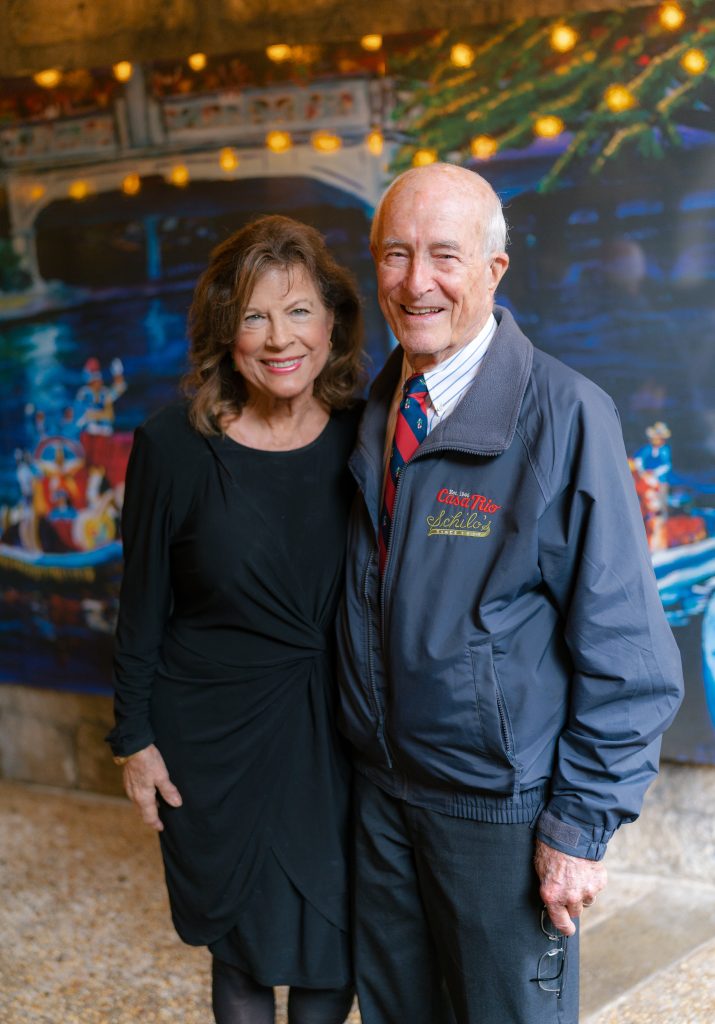
–Elizabeth Lyons Houston, Casa Rio fourth generation owner
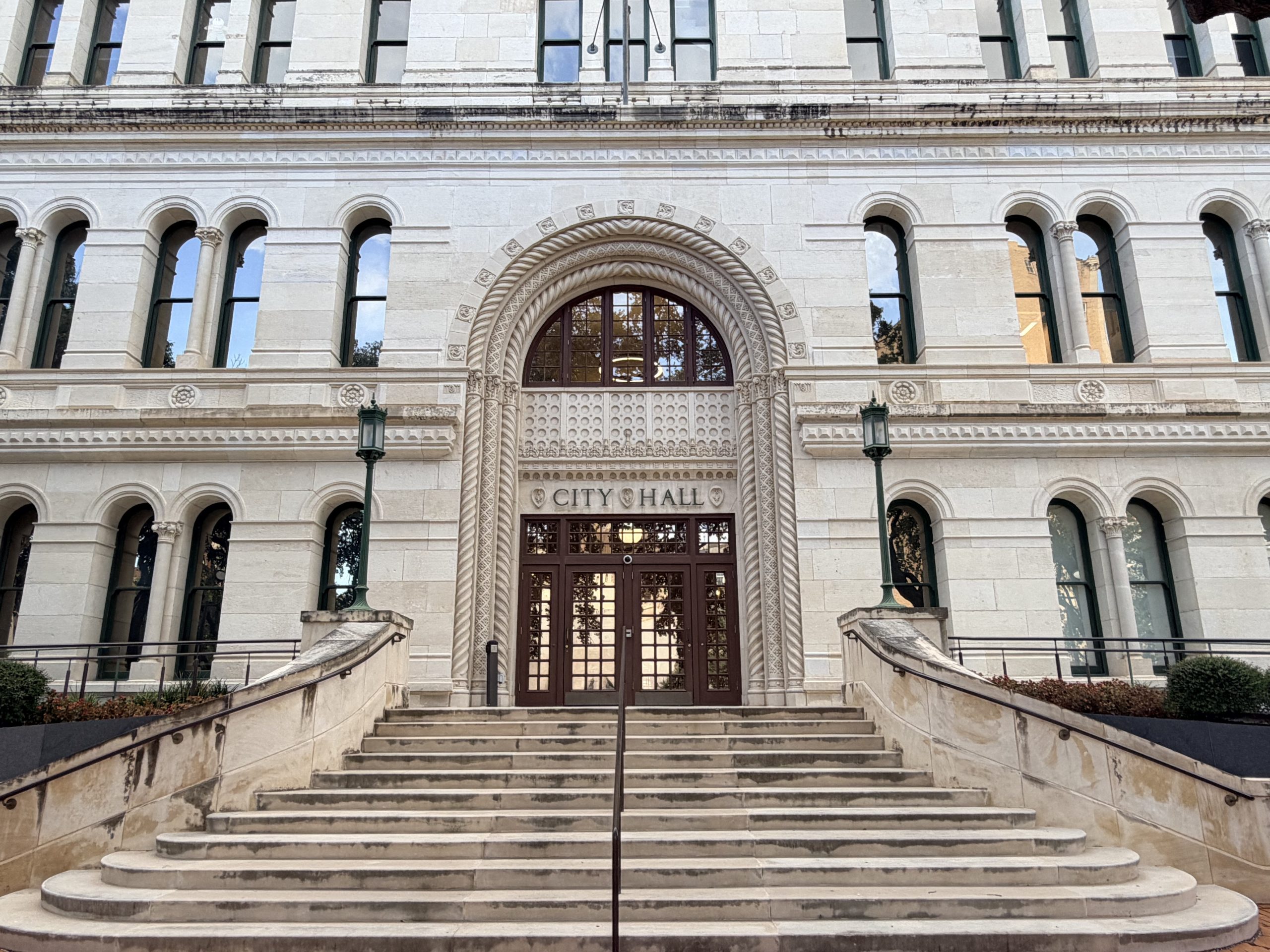
When Casa Rio approached the Department of Arts & Culture with the idea, the department provided guidance on artist selection, permitting, and logistics, supporting the restaurant through a commission process that is available to any downtown business owner interested in creating public art on their building.
“From the very beginning, the Department of Arts & Culture was incredibly supportive,” Houston said. “They helped us understand the process, showed us different pathways, and really held our hand through the entire commission. That support made it possible for us to move forward with confidence.”
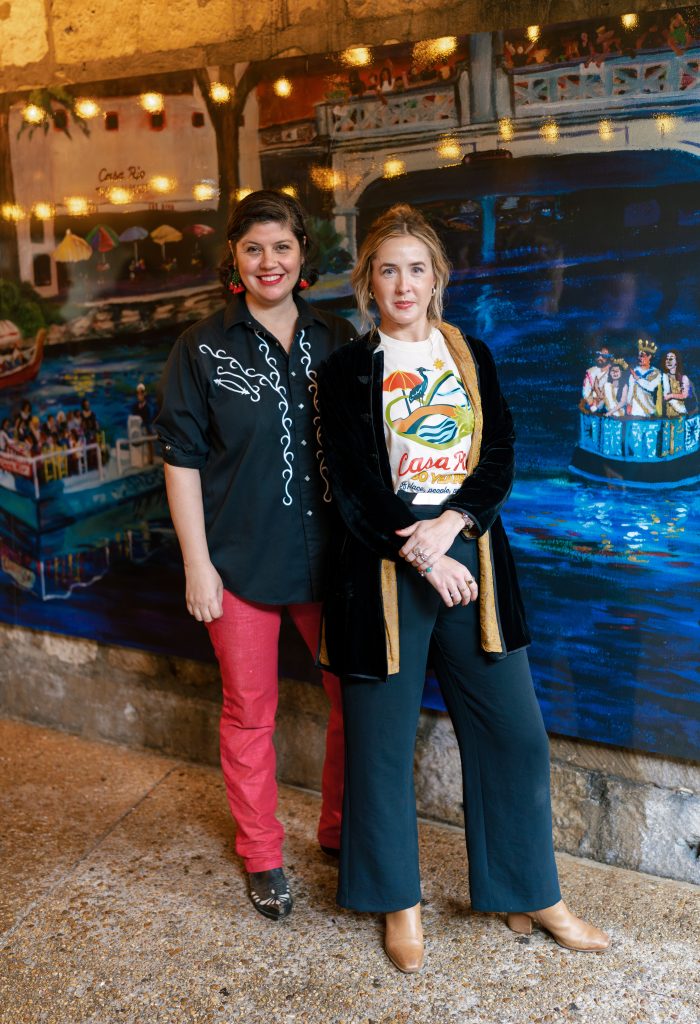
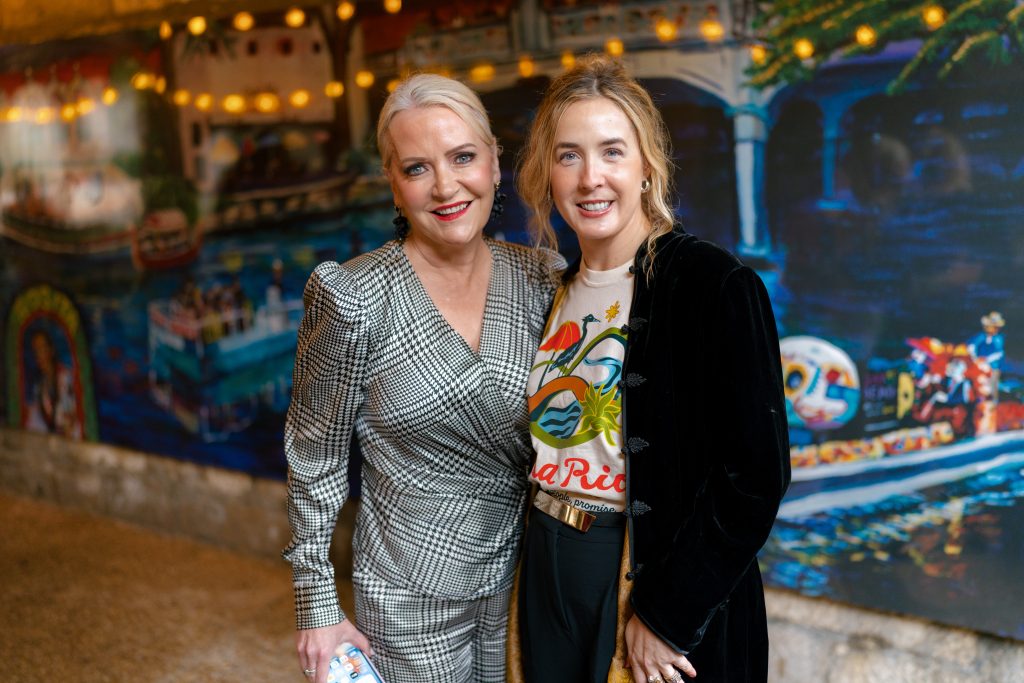

“There is tremendous value in private businesses taking initiative in public art,” said Krystal Jones, Executive Director of the City of San Antonio Department of Arts & Culture. “Studies show that cultural investments—especially murals—can significantly boost foot traffic in an area. This not only enriches the public experience, but also reflects a business’s commitment to creating a welcoming and vibrant environment for the community.”
Now complete, the mural rests above the River Walk not as spectacle, but as part of the city’s fabric, connecting past and present through shared space.
As Cristina reflected, “Through it all, the river and bridge remain enduring threads connecting community, commerce, and culture.”