

Part Two of a four-part Urban Nerd series on The Quiet Giant – how Active Capital is pulling off the most unlikely venture story in Texas.
When I was CEO of Geekdom, one of the most common frustrations I heard from founders was simple: there wasn’t enough capital in San Antonio.
That complaint came from every corner of the ecosystem. First-time founders. Experienced operators. Engineers with a prototype and nowhere to turn. Getting a startup funded here has never been easy. In many ways, it still isn’t. We’ve made progress, but we haven’t reached critical mass.
I watched the toll that took. I also watched what often came next: people leaving.
San Antonio loses talent not because people want to leave, but because opportunity pulls them elsewhere. Capital is part of that gravity. It’s one reason so many startups eventually relocate or never start here at all.
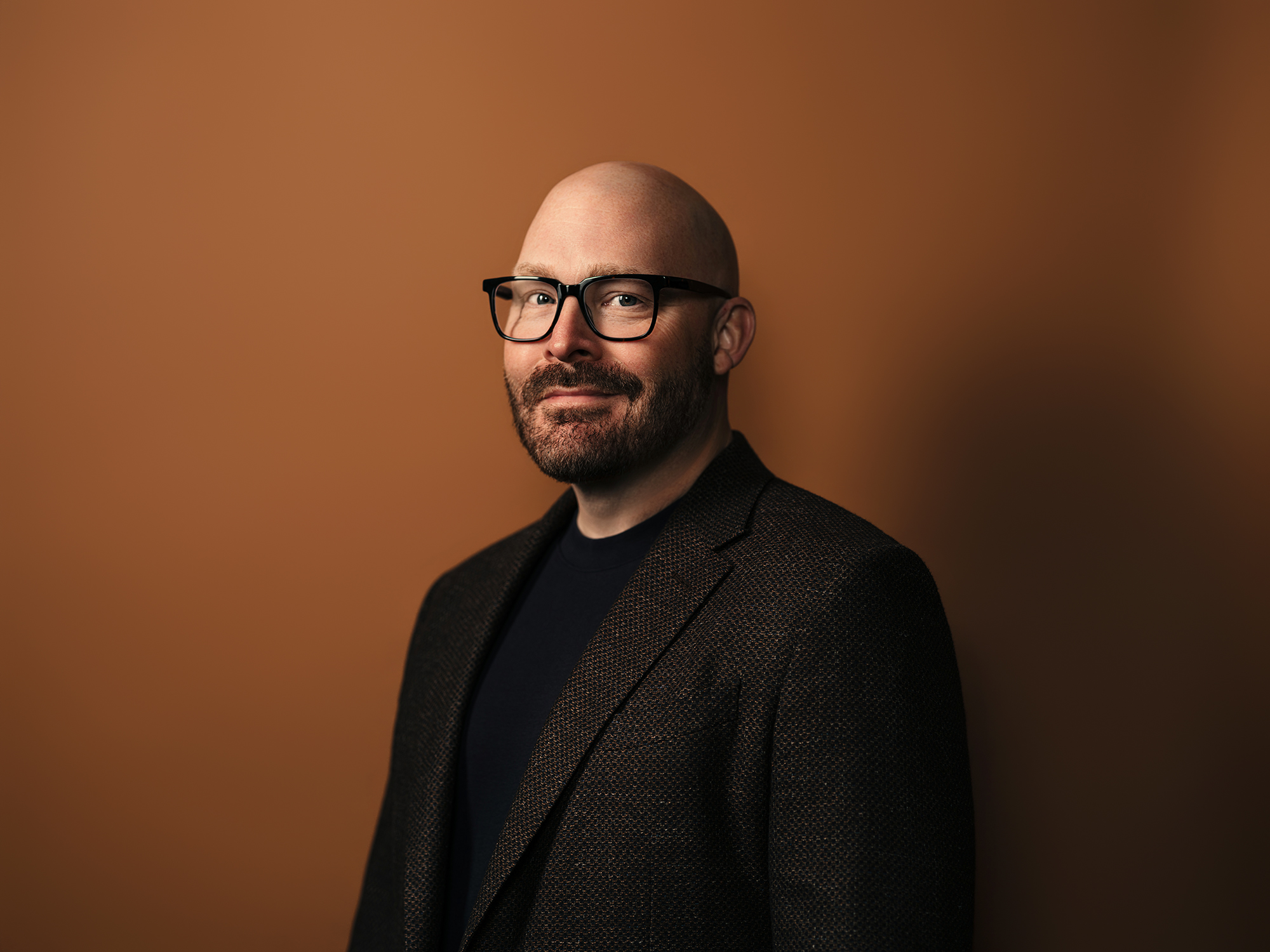
That’s why I’ve been so interested in Pat Matthews’ story. Not just because he built a venture firm, but because he did it while staying in San Antonio. At one point, even Rackspace was being courted to leave the city. Pat saw that tension up close and still chose to build here.
To understand Active Capital, you have to understand what came after Rackspace.
But first, it helps to understand what Rackspace was for Pat.
Rackspace had acquired his company, Webmail, in 2007. What followed was less an exit than a second act. Pat stayed on to run the email business, growing it from roughly $10 million to $25 million in annual revenue during his first eighteen months at the company.
Soon after, Rackspace asked him to move to San Antonio and help lead its emerging cloud computing division.
At the time, cloud infrastructure was still new. Amazon Web Services had only recently begun reshaping how software companies were built, and thousands of startups were launching on hosted infrastructure instead of running their own servers. Inside Rackspace, Pat found himself at the center of that shift.
Over the next several years, the cloud business scaled rapidly, eventually reaching roughly $500 million in annual revenue. Just as important, Pat stayed deeply connected to the startup ecosystem forming around the technology. Rackspace hosted thousands of young companies experimenting with new software models, and he spent much of his time working with the founders building them.
That vantage point mattered. It gave him a front-row seat to how startups were being built, funded, and scaled during the early cloud era.
It also planted a seed. By the time Pat left Rackspace in late 2013, he had spent years watching startups form around him. It was only a matter of time before he moved from supporting founders to backing them.
Pat left Rackspace in late 2013 with no clear plan.
“I didn’t have anywhere to go. I just knew it was my time to leave,” he said.
What he did have was a pull back toward entrepreneurship. In some ways, he had never fully left it. Even at Rackspace, he operated entrepreneurially, helping scale its emerging cloud business, leading M&A, and staying close to the startup ecosystem.
When he finally stepped away, Pat didn’t retreat. He began investing in startups, quickly becoming one of the most active angel investors in Texas, backing more than 100 companies across the state, the Bay Area, and beyond. It was early days, and there was no manual for how to do it, so he learned by doing, by winning, and by losing.
Angel investing gave him exposure, but it did not give him influence. He didn’t feel like he was building.
“When you’re an angel investor, you have very little influence,” he has said. “You’re putting capital in and hoping the company can raise institutional dollars. But once they do that, they don’t communicate with angels very much.”
He wanted to be closer to founders and the early decisions that shape a company’s trajectory.
Pat found himself in a strange place. After years as an entrepreneur and CEO, then an executive at a major tech company, his identity felt unmoored. It was a rough couple of years. He had lost his sense of where he fit.
He explored options. Joining another venture firm. Becoming a CEO again. Starting something new. He even briefly ran a company acquired by a private equity firm.
“I realized I did not enjoy being inside the private equity world,” he said. “I’m much more about hopes and dreams. Private equity is about crunching numbers and lowering costs.”
Pat knew he wanted to be in venture capital, but he was intimidated by the idea of raising capital. He had only raised a small amount for his startup, and Rackspace was fully capitalized by the time he got there. So before committing to a formal fund, he decided to test himself.
He created what he calls a concept fund, investing $1 million of his own money and inviting ten trusted friends to invest $100,000 each. The result was a $2 million proving ground that allowed him to practice managing capital for others.
“It gave me confidence,” he said. “I could say, I’ve been managing money for other people, and it’s working.”
That mattered, especially outside Silicon Valley.
“People read headlines and think you have to raise a $100 million or billion-dollar fund,” Pat said. “A lot of people get stuck.”
Around that same period, life added clarity.
His mother died in 2017 while he was still soul-searching for his next big thing. His father had died a few years earlier. Each loss carried weight and reinforced a growing conviction that time was not unlimited.
“Life is short,” he has said. “I had to go find my path again.”
Shortly after his mother’s passing in 2017, he stopped circling the idea and committed fully. In 2018, Active Capital launched its first institutional fund of $21 million. Today, the firm manages roughly $125 million across three core funds and several special purpose vehicles, a rare achievement given that fewer than 20 percent of first-time fund managers ever raise a third fund.
Pat is one of them.
Still, the numbers do not fully explain what makes Active Capital different.
Pat describes the firm as “high-conviction pre-seed,” which in practical terms means writing large checks early, typically $500,000 to $1 million, into very young companies, often before there is product or revenue.
“We’re looking for founder-market fit, not product-market fit,” he says.
Pat wants Active Capital to be the first real believer.
“You always remember who bet on you first,” he said.
The firm’s structure reinforces that philosophy. Active Capital is intentionally small. The firm operates with a solo general partner model. Pat is the founder and general partner, effectively the CEO.
“I don’t believe in a multi-GP committee model at our stage,” he said. “It is very difficult to get multiple people to see the same thing at the earliest stages. Committee models create politics and resentment. They ultimately lead to breakups.”
Instead, the firm is strengths-based. One partner runs deal flow. Another runs operations. Pat spends nearly all his time with founders after investing.
Pat doesn’t describe himself as “founder-friendly.”
“Too many people bullshit and coddle founders,” he said.
“I want nothing more than to help founders achieve their maximum potential. Sometimes that requires coaching or tough conversations. Sometimes it just means getting out of their way.”
That focus includes monthly touchpoints and being available when founders need him.
“My goal is to earn the trust of the founders I’m working with. I want them to call me with good or bad news. Once trust is established, this almost always happens.”
Geography is another differentiator.
“I raised about 80% of our capital from San Antonio investors,” Pat said.
That’s almost unheard of in venture capital. San Antonio became home during his Rackspace years. His personal life is rooted here. His professional network grew here. Over time, that community became his investor base.
“San Antonio put me in business,” he said.
Active Capital invests nationally, often in underdog cities, but Pat spends significant time in San Francisco as well. He believes San Francisco remains the epicenter of emerging technology.
“Every tech company needs to be plugged into San Francisco. Many founders should move there, but those that don’t should at least visit often,” he said.
One of Active Capital’s next missions is to act as a bridge, helping founders from cities like San Antonio and Austin connect to that ecosystem.
That perspective came from experience.
“At Rackspace, we had too much Texas bravado,” Pat said. “We didn’t spend enough time in San Francisco. We missed trends.”
Active Capital is built to avoid that mistake.
By the time Active Capital reached its third fund, the firm had become one of the most active pre-seed investors in the country, writing roughly one high-conviction check per month.
And then came ProsperOps.
A company that reflected nearly every belief Pat had been refining for years: early conviction, founder-market fit, disciplined capital, and doubling down when the timing was right.
That story is next.
Next: The story of ProsperOps and how one early bet turned Active Capital’s philosophy into one of its most defining wins.