


Seven years ago, I was lucky enough to be sitting at a table with some of the most creative people in San Antonio education, the Cast Network and friends. We were brainstorming and dreaming about opportunities for kids. We shared memories from our own middle and high school experiences, and Lorenzo Gomez’s book, Tafolla Toro: Three Years of Fear came up in the conversation. His memoir reflects the experiences of going to a new school, a coming of age story that reveals a young man’s fears, his desire to be accepted, the warmth of his connections with family and friends, and the years of therapy he needed to work through the hardships of that time. Lorenzo attended middle school in the early nineties and I was a brand-new teacher in a local high school. It was a violent time for young people, the pinnacle of gang violence in our city. I remember city police visiting our faculty meetings to talk about gang attire, graffiti symbols, and behaviors. This was in response to a terrible and fatal gang fight in a nearby ditch close to our campus, involving some of our students. I remember most students being afraid, sharing stories about lining the interior of their homes with steel to prevent drive-by bullets from entering, avoiding confrontations in the hallways and restrooms, and searching for understanding.
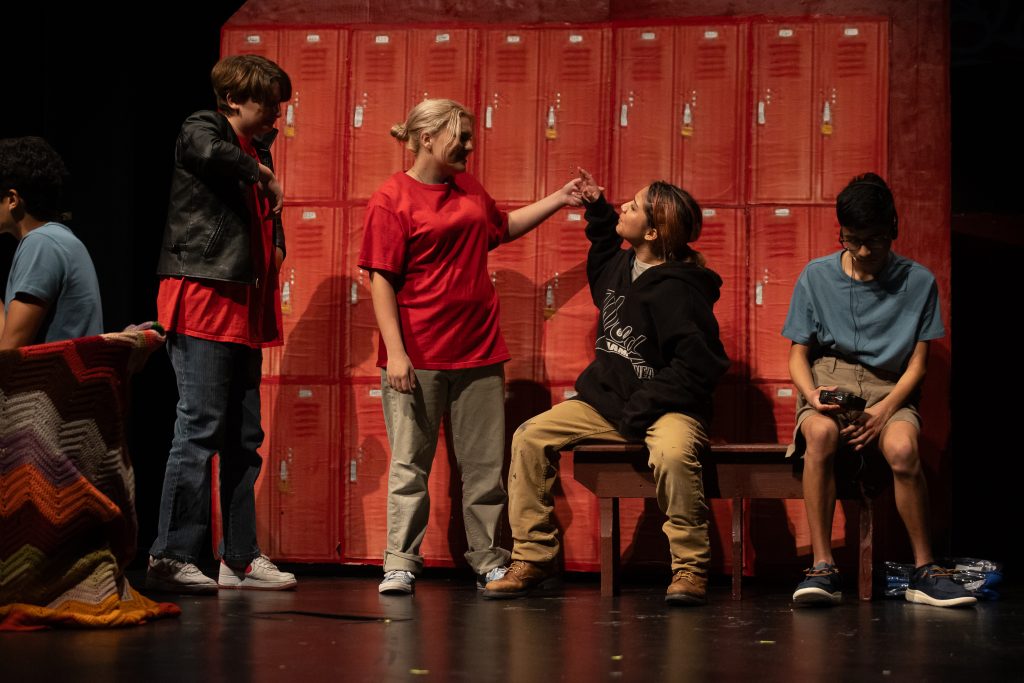
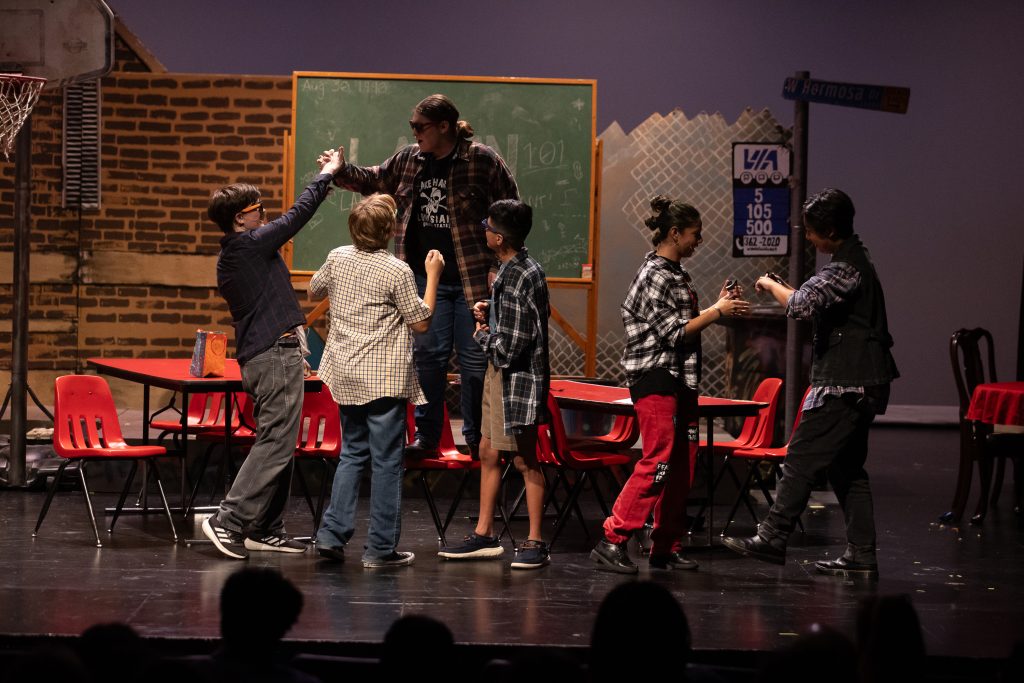
Lorenzo captures the interior life of a student’s experience at that crucial time. He shares intimately how, later in life, he needed help unpacking that fear and stress in order to grow mentally healthier. In the book, he learns in therapy how to write personal letters to his younger self to guide him through his healing and legitimize his fears and questions, and he shares those very letters throughout the story. These feelings Lorenzo had could very well reflect what kids experience today in the face of gun violence. Students discuss this fear in the Q & A sessions that follow our story. Their honest questions are always so thoughtful and reflective.
Witnessing Lorenzo’s story shows young people that it’s ok to be afraid, okay to need help, and okay to rely on the people that surround you with love—teachers, family, or even, in Lorenzo’s case, Officer Almandarez, the campus police.

Later, we decided that our students could adapt Lorenzo’s book into a play, with Lorenzo as their chief consultant. Wow. What an opportunity! Trinity University gave us a writing room at the Holt Center, and 14 students spent two weeks studying his book and deeply discussing the work. The young writers worked through the memoir, selecting parts of the story that had to be told on stage. We answered questions like: What was most important in the story? What could be told on a stage? How should we share the letters? What can we convey through the design, and what would an audience of young people walk away having learned?
Big questions for young writers, but adults could not possibly answer these questions in the same poignant way. Students wrote the play. Lorenzo graciously and with complete trust handed over his personal story to the young writers. They took the process very seriously because they knew that one of the best lessons in the book—one that could save your life—is to seek help from the safe adults around you. They had the chance to meet and interview the real Officer Almandarez, who is just as kind and earnest as the character in the book. They also met some of Lorenzo’s amazing family and talked to his siblings, his mother, and father. Our young writers felt so connected to his story that they felt they knew Lorenzo like family; and in many ways, they did.

We started with play readings and reader’s theatre with the writers and young actors playing the roles, so they could hear their words aloud. We revised and returned to writing again and again. During COVID, in masks and socially distant chairs, we performed a reader’s theatre at The Guadalupe Theatre to tell our story. Later, we played the entire one-act play for 600 9th graders at the Empire Theatre in downtown San Antonio. Each year, with feedback from the year before, we fine-tune the play, to ensure the story remains honest and fresh, and that the letters Lorenzo wrote to his younger self still stand out as crucial in his healing—and likewise, for the audience.
Each year, every cast and crew member, now over 70 students, writes a personal letter to their younger self, sharing their own coming-of-age story of growth and transition. At the end of the play, some of the students read their letters aloud. This part really grabs the heart of the audience. It captures the most vulnerable parts of being human. No one walks away without having had some kind of cathartic experience, after watching Lorenzo’s story unfold and hearing first hand, through personal letters, how that story modeled healing, healthy mental awareness, and growth in young people.
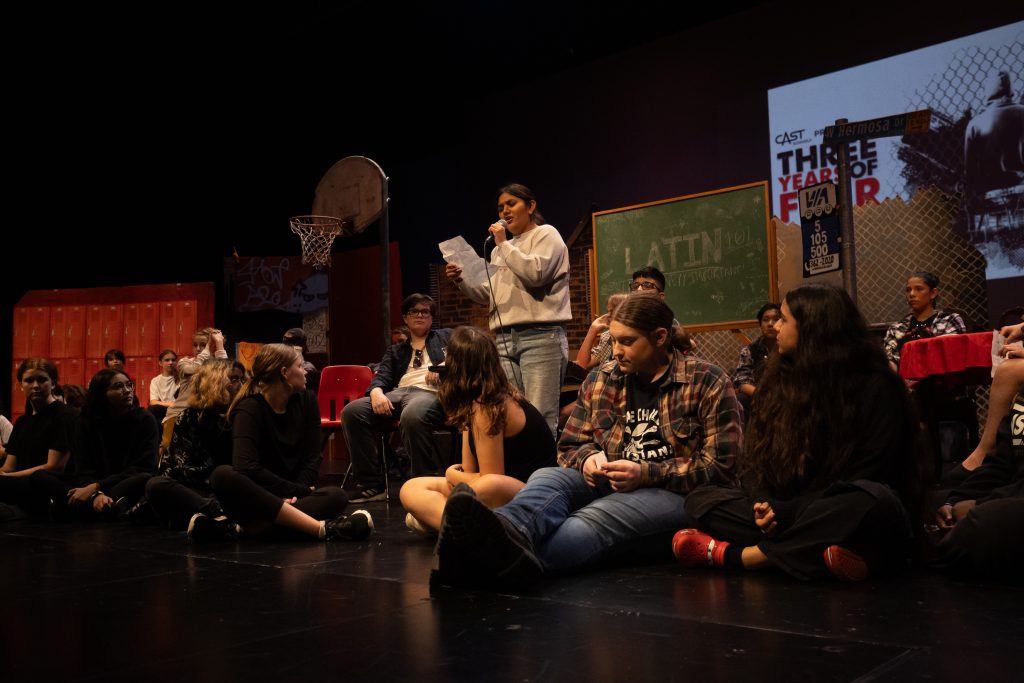
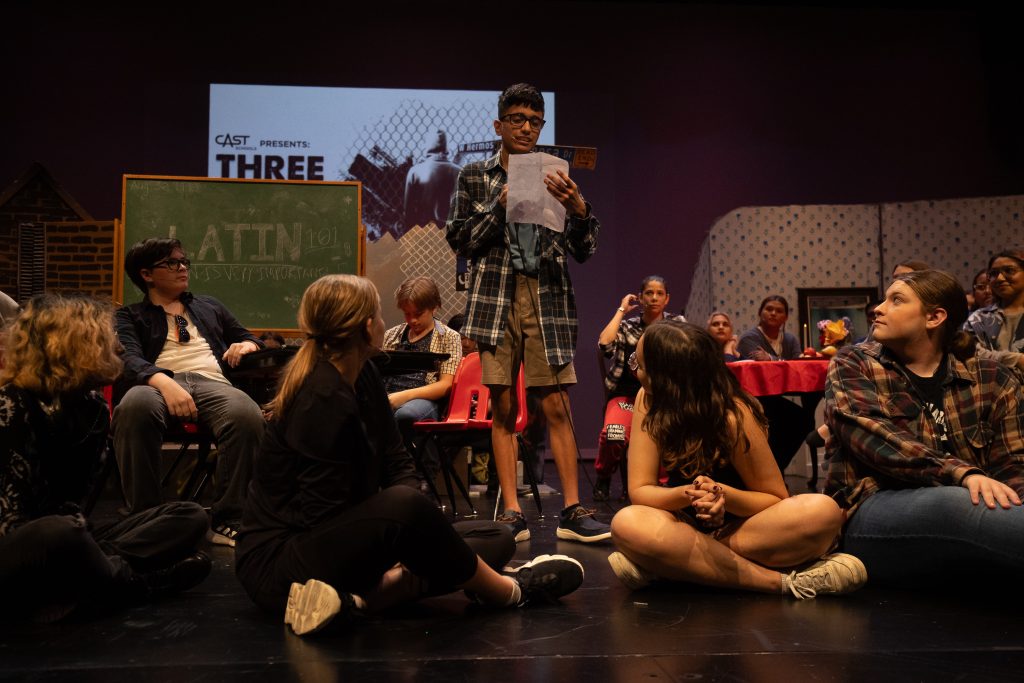
You remember the day you first walked into the halls of a new middle or high school. The dangers that you knew were real were present, and you had to find a way to make it a safer place—surround yourself with friends, a safe adult, your family, therapy, or maybe even writing your own story. Writing to your younger self, in the face of those fears, daunting transitions, and the natural changes of growing up, brings one’s own strengths and gifts into personal awareness. Thank you Lorenzo.
Lorenzo learned this in really good therapy sessions and by telling his story. He shared this story with everyone, and our young writers, actors, designers, and technicians, and 650 9th grade audience members walked away having witnessed, heard, and learned a possible way to face their own fears, a possible answer. Is there a better story to tell?
This year’s performance of Three Years of Fear will be held at the Carver Community Cultural Center’s Jo Long Theater on September 4th, 2025, at 7 p.m. Tickets are $10 at castschools.com, and I hope you’ll join us to experience this powerful story brought to life by our students.
