


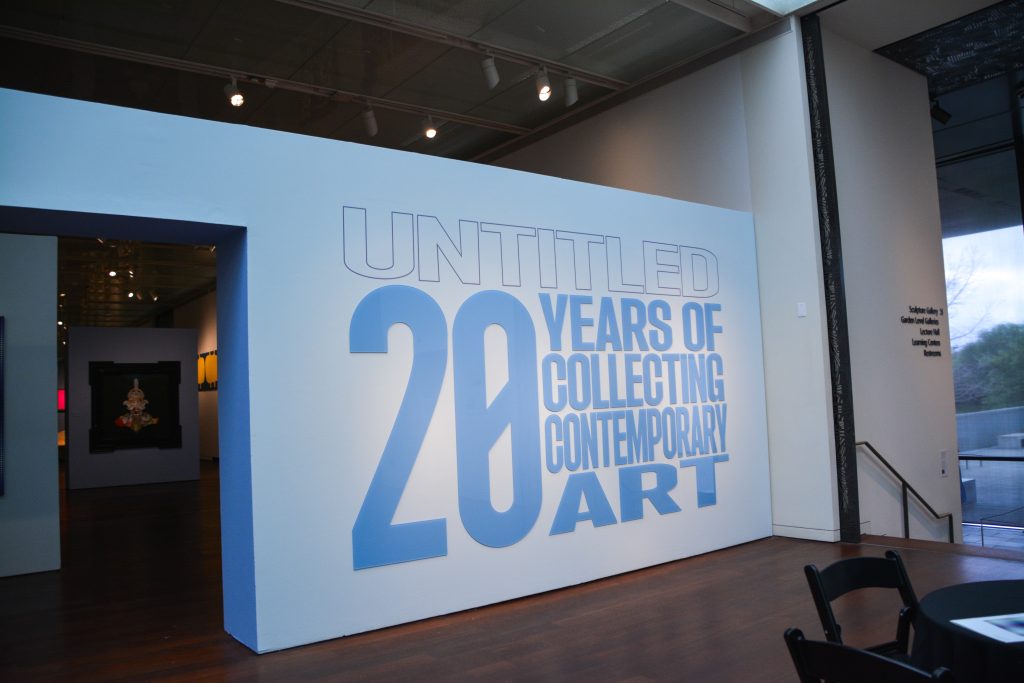
Contemporary art takes on movement, texture, color, and form inside the McNay’s “Untitled: 20 Years of Collecting Contemporary Art.” Featuring more than 100 works from the museum’s collection, the exhibition celebrates the legacy of former Head of Curatorial Affairs René Paul Barilleaux and the vision that shaped the McNay’s contemporary holdings over two decades. Rather than following a traditional chronological format, the exhibit invites visitors to experience contemporary art through the visual language that defines it.
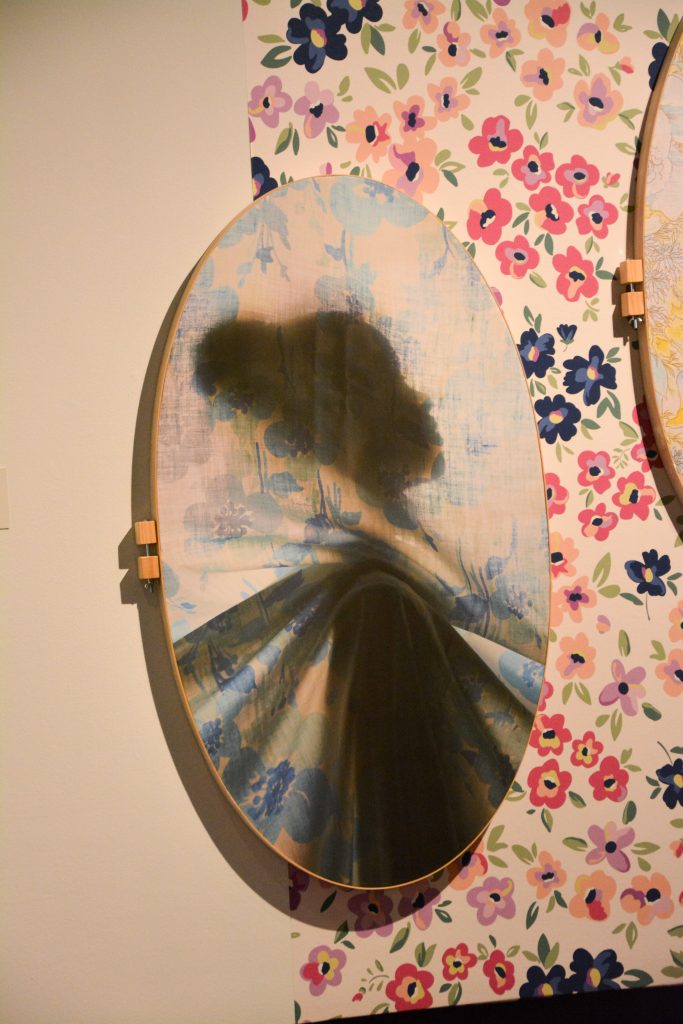
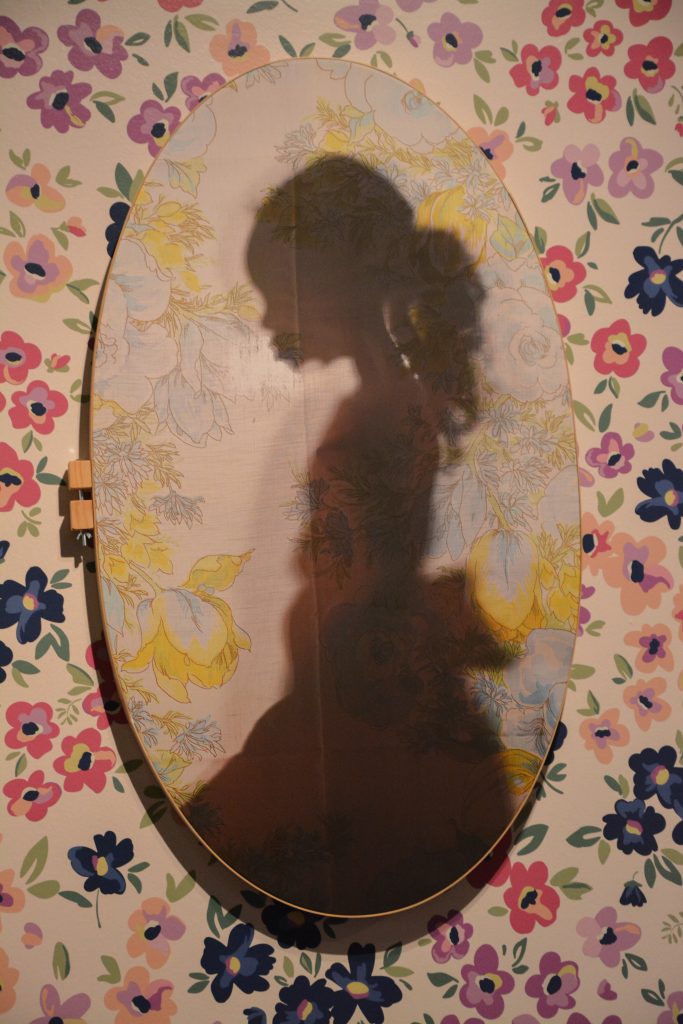
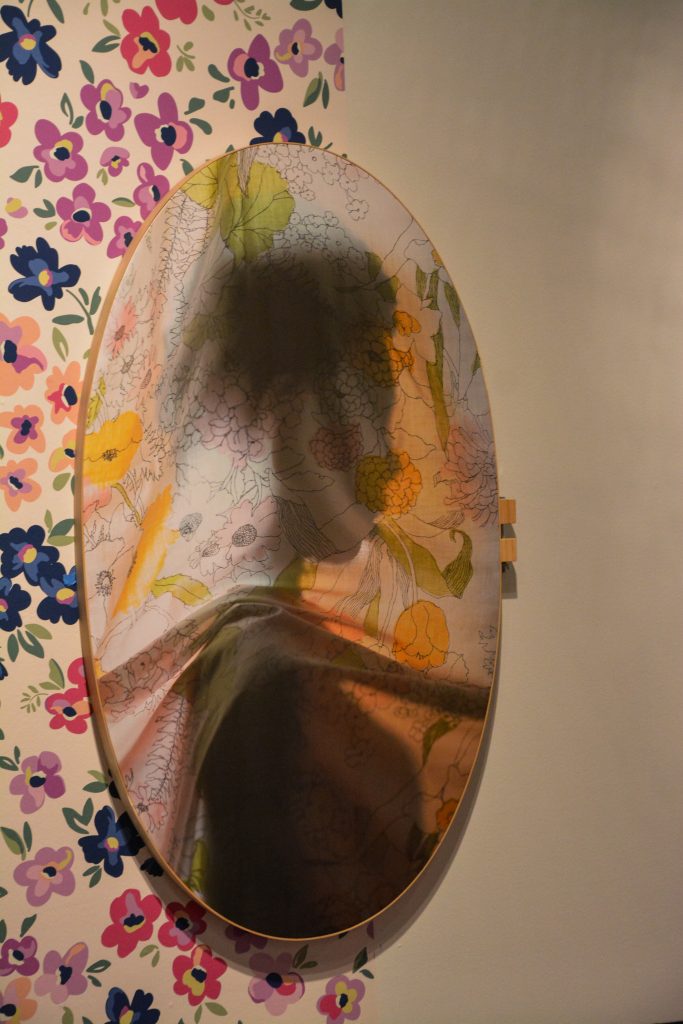
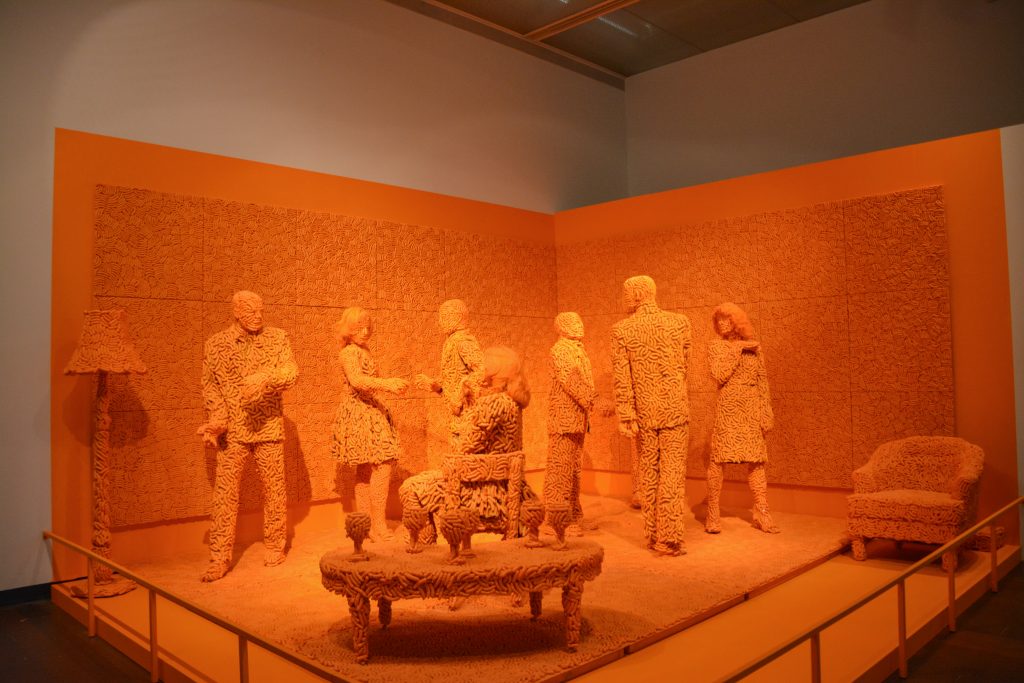
From the pairing of Letitia Huckaby’s Koinonia, featuring three silhouettes of young girls on an embroidery hoop, to Sandy Skoglund’s installation The Cocktail Party, comprised of bright orange Cheetos shaped into figures gathered together, the exhibition explores the elements and principles of art through a cohesive yet unexpected viewing experience.
Over the course of his career at the McNay, Barilleaux assisted in acquiring more than 200 works of art for the museum, helping expand its contemporary collection through diverse media, perspectives, and artists from around the world. Serving as a reflection of that work, “Untitled: 20 Years of Collecting Contemporary Art” highlights not only the evolution of the museum, but also the lasting impact of Barilleaux’s curatorial leadership before retiring in September 2025.
Line
The path of a moving point. An exploration of time and space.
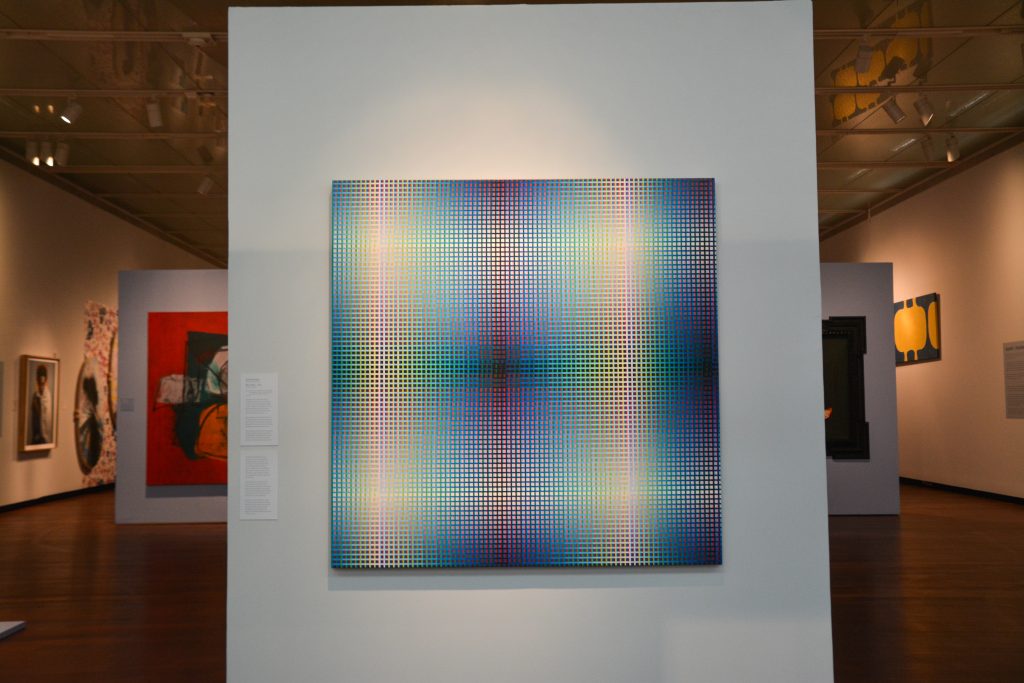
The exhibition opens with Barilleaux’s first acquisition for the McNay, Susie Rosmarin’s Blue (#267). The work acts as both the exhibit’s starting point and the beginning of Barilleaux’s time with the museum. Vibrant lines run up and down the piece, presenting a modern work of geometric abstraction. Similarly, Barilleaux guided the direction of the McNay’s contemporary collection throughout his career, leading the acquisition of more than 200 works of art.
Shape
The foundation of a structure, defined by enclosed lines and boundaries.
Shapes are fundamental to the structure of a piece. The exhibit experiments with shape through works such as Henni Alftan’s The Curtain II and Sean Scully’s Doric Yellow Crimson. Barilleaux helped shape the McNay itself, transforming the collection and ensuring the museum remained a “vibrant hub for contemporary art dialogue,” as stated by Dr. Matthew McLendon, Director and CEO of the McNay.
Color
The visual sensation when light reflects back from an object to create hue, saturation, and value.
Color expresses a range of emotions and feelings, as seen in Kelly O’Connor’s Magnetic Fields. The work bursts with color and recognizable figures, including Alice from Alice’s Adventures in Wonderland and Maria von Trapp from The Sound of Music. The emphasis on color ultimately reflects what Barilleaux brought to the McNay itself: works saturated and desaturated, each illuminating the museum’s white walls with vibrancy and life.
Form
Three-dimensional objects — or the illusion of them. A work that physically moves beyond the frame.
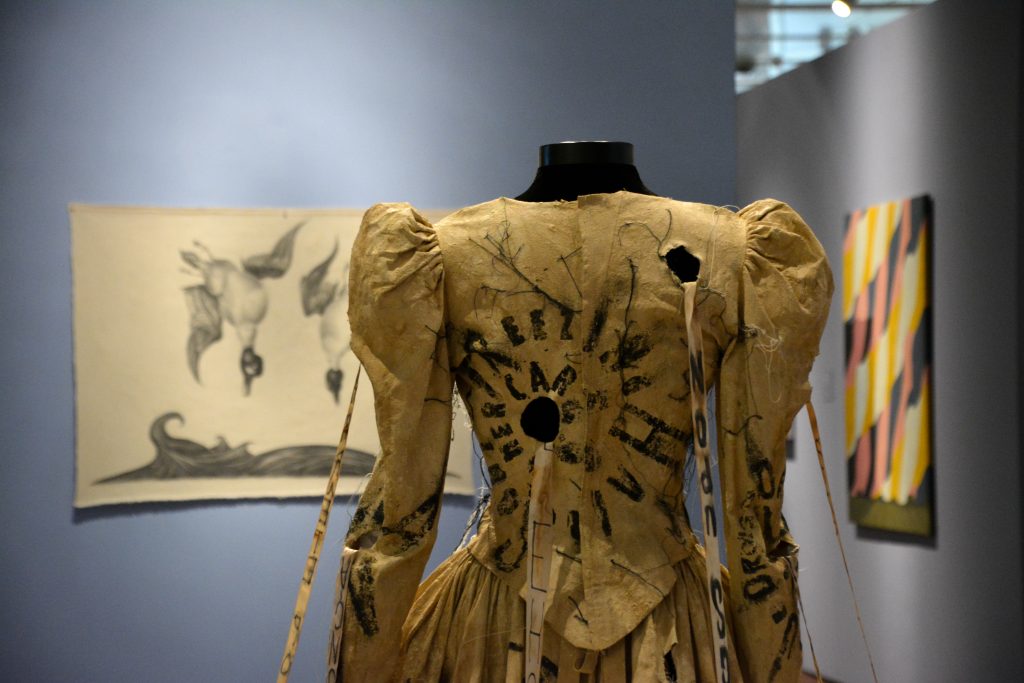
At the center of the form section stands a dress crafted from ribbons, plaster, tea, and oil on muslin. The work, created by Lesley Dill, represents art that extends beyond the traditional canvas. Barilleaux brought similar depth to the collection he helped build, reaching beyond the frame of San Antonio to celebrate artists from around the world. In Barilleaux’s own words, he worked toward “embracing a broader international and diverse scope of acquisitions that intentionally convey diversity in both media and perspective.”
Texture
A perceived surface quality, one that can be felt and described.
Displaying works such as Vanessa German’s BLACK GIRL WITH SNAKES, the exhibit explores texture through pieces meant to be experienced visually. Glitter sparkles beneath the museum lights while colorful flowers bloom from the girls dress, crafting an experience of visual touch. Barilleaux’s efforts as curator extended beyond creating visual aesthetics. He acquired works that encourage viewers to feel beyond physicality. Texture invites guests to imagine the sensation of a piece against their fingertips and palms, moving beyond visual appreciation and into emotional experience.
Value
The lightness or darkness of a color.
Through works such as Grayson Perry’s The Celtic Tradition and Jane Hammond’s Yard Sale, the exhibit emphasizes the importance of light — or the absence of it — in shaping a work of art. Throughout his time at the McNay, McLendon explains that Barilleaux “committed [himself] to elevating established and emerging artists,” providing a sense of illumination so their works could shine within San Antonio.
Space
The area around, between, or within components of a piece.
Space is explored through works such as True Believer by Deborah Roberts and Strange Fruit by Amalia Mesa-Bains. Through his curatorial work, Barilleaux reinforced a space where art could be honored, admired, and deeply analyzed by visitors.
Pattern
The repetition of elements.
The McNay features works that highlight pattern, including Lance Letscher’s Funny Hat, where pops of color and shape weave together to create a unified image. In much the same way, Barilleaux arrived at the McNay each day committed to ensuring the museum acquired art that reflected curiosity, passion, and life.
The exhibit is “a fitting tribute to René Paul Barilleaux’s legacy,” McLendon says. It is also an experience that represents the McNay’s evolution through a format separated from traditional chronological and thematic frameworks. The McNay serves as an artistic gateway for San Antonio, one shaped in part through the passionate work and enduring vision of René Paul Barilleaux.
Learn more about and experience the exhibit, on view through September 6, 2026, at McNayArt.org.